
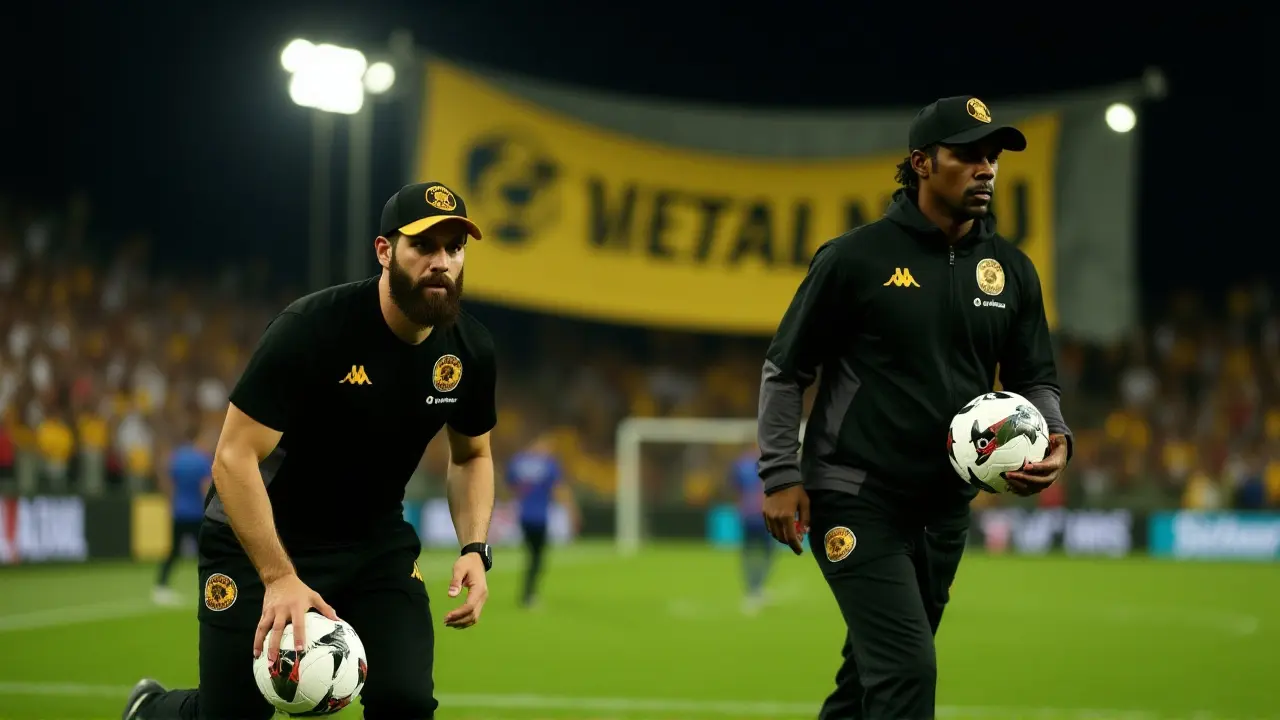
The air was thick with tension when Khalil Ben Youssef, co-head coach of Kaizer Chiefs, took to the podium. It wasn't just routine press chatter; it was a defensive stand against mounting criticism regarding the club's lackluster offensive output.
Last weekend, the Soweto giants faced a barrage of questions from journalists frustrated by a season where goals seem scarce. With only 35 goals scored across 27 matches, the Glamour Boys are trailing significantly behind their arch-rivals. Ben Youssef didn't mince words in his response, effectively telling reporters to offer solutions if they had better ideas.
The Coaching Staff Takes Heat
Here's the thing about modern football management: it's supposed to be simple on paper but incredibly messy in practice. The technical staff at Kaizer Chiefs found themselves defending every missed opportunity. The narrative suggests the team creates chances but fails to finish. But does finishing purely rest on the bench?
"Do you believe that coaching a football team is an uncomplicated task?" Ben Youssef asked the room, challenging the media's simplistic view of performance. He argued that creating chances falls on them, but converting those chances relies heavily on player execution. "If you have an alternative solution, please share it," he said, emphasizing that training consistency is key rather than quick fixes. His age, 37, shows experience, yet he faces scrutiny often reserved for veterans twice his tenure.
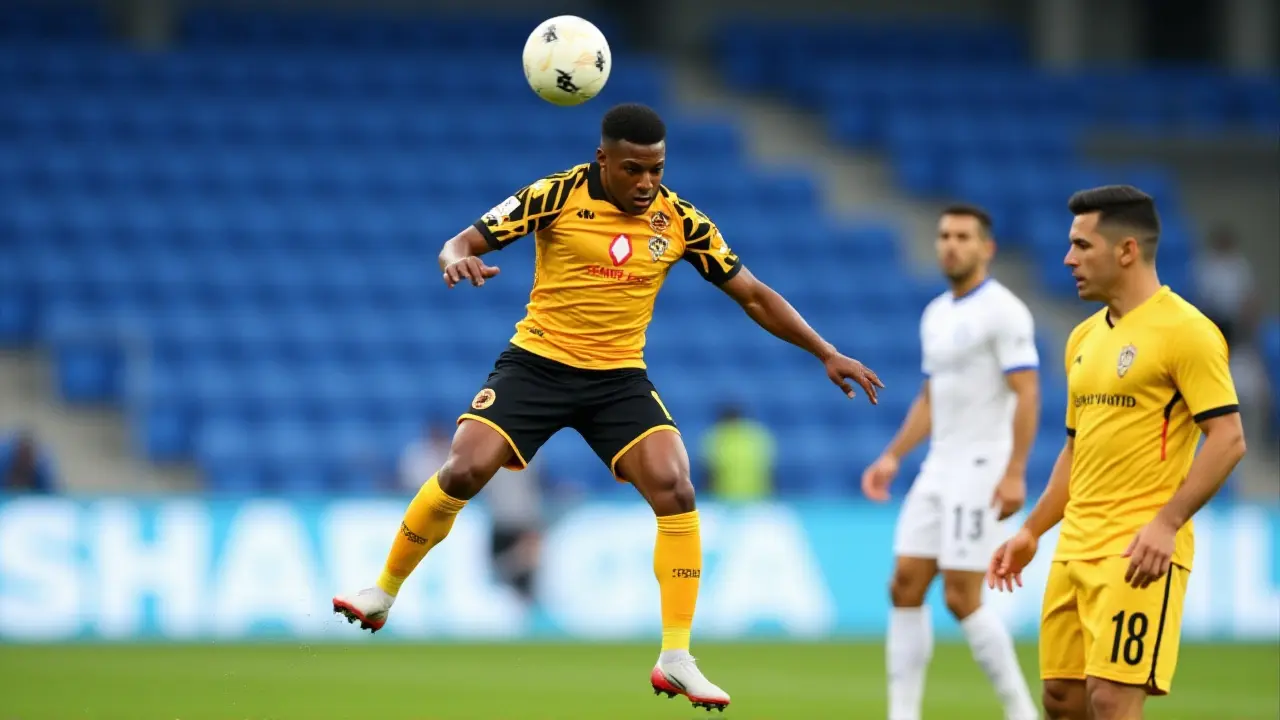
The friction escalated because the club recently invested heavily in firepower. They signed three new strikers: Inanyisa, Flavio Silva, and Etiosa Ighodaro. Theoretically, this should boost production. Instead, the net rarely moves. Comparatively, Orlando Pirates have smashed in 64 goals in 31 matches, while Mamelodi Sundowns sit at 57 goals in 30 games. The gap is staggering—almost double Chiefs' output despite Chiefs playing fewer games.
Accountability Crisis in the dugout
While the public eye focuses on goals, there's a deeper structural question brewing. Cedric Kaze, Ben Youssef's co-head, shared the blame during the recent interactions at Naturena. Both men were promoted from assistant roles after Nasreddine Nabi departed last September.
Since taking over, they've managed 21 matches, winning nine. However, losses to Stellenbosch eliminated them from domestic cups, and a narrow exit from the CAF Confederation Cup hurt morale. Specifically, they finished behind Al Masry due to goal difference after accumulating a rare 10 points in the group stage.
This setup raises eyebrows among pundits. Former defender Lifa Gqosha argued publicly that employing two head coaches dilutes responsibility. "There's no one accountable between the two," Gqosha noted. He suggested that having dual philosophies leads to confusion during high-pressure moments. If one coach wants a possession style and the other prefers counter-attacks, players get mixed signals. That kind of internal conflict often kills momentum.

Realistic Goals vs. Management Ambitions
Turns out, expectations haven't aligned perfectly between the dressing room and the boardroom. Kaze admitted openly that finishing third in the Betway PremiershipSouth Africa would satisfy him this year. It's a modest target given the historical dominance expected from Amakhosi.
Yet, Kaizer Motaung Jr., Sporting Director, maintains loftier dreams. He believes Champions League qualification is still viable, despite falling behind Pirates and Sundowns. The disconnect here matters: when management aims for titles and coaches aim for stability, friction follows. Usually, these cracks show up in transfer windows or squad selection decisions later in the term.
Currently, neither coach seems safe past the season finale. Critics claim they lack the CV for such a massive franchise. Whether they survive depends entirely on the next few weeks. A win against FNB Stadium hosts on Saturday against Durban City is non-negotiable.
The Road Ahead
With a Soweto derby looming on Saturday at FNB Stadium and a fixture against Stellenbosch on Tuesday, pressure is at its peak. These aren't just games; they are lifelines for job security. The co-coaches need to prove that their strategy works not just in theory, but in the muddy reality of the pitch. If the goals don't start flowing by mid-week, the "clap back" might turn into resignation notices.
Frequently Asked Questions
Why are Kaizer Chiefs struggling to score goals?
Despite signing three new strikers, including Flavio Silva and Etiosa Ighodaro, the team has failed to capitalize on chances created. The current statistics show only 35 goals in 27 matches, which is significantly lower than rivals who have scored over 50 goals each this season.
Is the two-coach system causing issues?
Former players like Lifa Gqosha suggest that dual leadership lacks clear accountability. When two coaches lead, conflicting philosophies can confuse players on the pitch, making it difficult to execute a consistent game plan during critical moments.
What are the upcoming crucial matches for the team?
The team faces Stellenbosch in the Premier Soccer League on Tuesday and the Soweto derby against Orlando Pirates on Saturday at FNB Stadium. Winning these fixtures is essential for maintaining their position in the title race and securing the coaches' jobs.
Can Kaizer Chiefs still qualify for the Champions League?
Sporting Director Kaizer Motaung Jr. remains optimistic about Champions League qualification, though current form suggests they trail significantly behind leaders Sundowns and Pirates. Realistically, the team may need a major turnaround to meet this high expectation.
15 Comments

Sarah Day
March 29 2026
i totally agree with you on that point. sometimes its hard to judge from the stands without knowing the training sessions. lets hope the boys pull through because they usually fight hard.

ryan pereyra
March 29 2026
The systemic failure within the organizational structure is palpable. To suggest that a teleological approach to goal conversion solves the epistemological crisis of performance metrics is fundamentally flawed. The dichotomy between management expectations and coach competency reveals a deeper structural rot. When strategic ambiguity permeates the dugout, player execution becomes merely probabilistic rather than deterministic. We are witnessing a classic case of misaligned incentives compounded by poor resource allocation. The media narrative is superficial, yet it highlights genuine inefficiencies in the tactical framework. Accountability cannot be diluted across dual command structures without resulting in operational paralysis. One must scrutinize the underlying cognitive dissonance present in the press conference response. It is a spectacle of modern football management failing to adapt to competitive dynamics. The statistical anomaly of thirty-five goals is indicative of broader regression. This situation demands more than platitudes from the technical staff. We require data-driven introspection rather than rhetorical deflection against critics. The solution lies not in silencing dissent but in restructuring the pedagogical approach to finishing. Until then, the gap widens significantly against superior competitors. Merely stating consistency matters ignores the acute deficiency in output quality.

Christine Dick
March 31 2026
It is quite disturbing, to read such arrogance from leadership roles! Responsibility should be taken fully, not pushed away onto journalists or supporters! A true leader accepts the consequences of poor performance! Blaming others is unprofessional, and shows a lack of character! Everyone deserves transparency, not vague promises about future changes! The board needs to intervene before morale decays further!

Bryan Kam
March 31 2026
Tell the press to shut up and watch the ball.

Crystal Zárifa
April 1 2026
That's one way to put it but honestly they need to actually kick some goals to justify that attitude lol. Just saying what everyone else is thinking though. Hope the weekend helps clear things up for them.

Anthony Watkins
April 2 2026
This is absolute garbage 😤 why keep them if they cant win simple. Fans are paying money for entertainment not excuses 👎🏻 fire both of them now 🗑️😡

Serena May
April 2 2026
Finally someone said it! 😂 these coaches are useless 🔥 waiting for another loss to prove me right 🙄

Divyanshu Kumar
April 3 2026
In my honest opinion whilst the press is aggressive they are missing the point of holistic development. Stratagy takes time to implement properly hense the frustration. We shuld allow them to settle in before declaring failure outright. Football is a complex sport with many moving parts involved daily. However if the net does not move there is indeed cause for concern regarding investment return. Perhaps a review of the transfer market choices would be beneficial. Still respect must be maintained for those trying to build something positive. Communication breakdowns often lead to these public spats unfortunately.

Jason Davis
April 4 2026
Actually looking at the underlaying numbers the xG suggests they creat chances but expctationally low finishing rate. The issue is probaby mental blockage rather than skill deficit alone. If they had a striker with better composure this could be sorted faster. The dual coach thing does add confusion though so thats fair. Still hope they turn it around cause the club history is great. Needs serious focus on mental side of game imho.

Cheryl Jonah
April 5 2026
Its obvious the league riggs the points somehow otherwise how does Pirates get double the goals? Something fishy goes on with the refs and officiating standards lately. They always protect their favorites while the big clubs struggle unneccesarily. Look at the pattern of injuries too which always happen near key derbies. I bet they know exactly whats coming and hide the truth from us.

Andrea Hierman
April 6 2026
While one might find that theory plausible in a vacuum it lacks evidence to support such claims responsibly. Sometimes outcomes reflect genuine disparity rather than external manipulation schemes. Nevertheless understanding the frustration of long term supporters is vital for maintaining trust within the community. Patience often yields rewards in sporting contexts even when it feels like an eternity. We must avoid succumbing to cynicism completely when analyzing performance trends objectively.

Danny Johnson
April 7 2026
I know how frustrating it is to watch your team lose but lets stay positive guys. Everyone has rough patches during the season and they still have games left to climb back up. Supporting them through the tough times is what makes real fans special. Just gotta believe in the squad and the coaching staff to figure it out soon.

Jane Roams Free
April 8 2026
Great attitude there, patience is key in football seasons. Every champion faces challenges that test their resolve and growth mindset. Keep rooting for the team because belief helps them perform under pressure. The journey is just as important as the final destination on the scoreboard.

Jullien Marie Plantinos
April 9 2026
No way you can just ignore the facts!!! They are failing completely!!!!! Other teams win because they play proper football not talk shop!!! Stop making excuses for bad management decisions!!
Write a comment
Popular Posts
Cheri Gray
March 28 2026
I really think the coahces are right to push back on the mediu. Its not easy scorig goals when the defense blocks everything. People always forget the players on the pitch do the work not the guys on the bench. They signed new people too but results take time to come around. Hopefully next week they find thier form because the fans are getting upset. It feels like a unfair target has been set for them already.