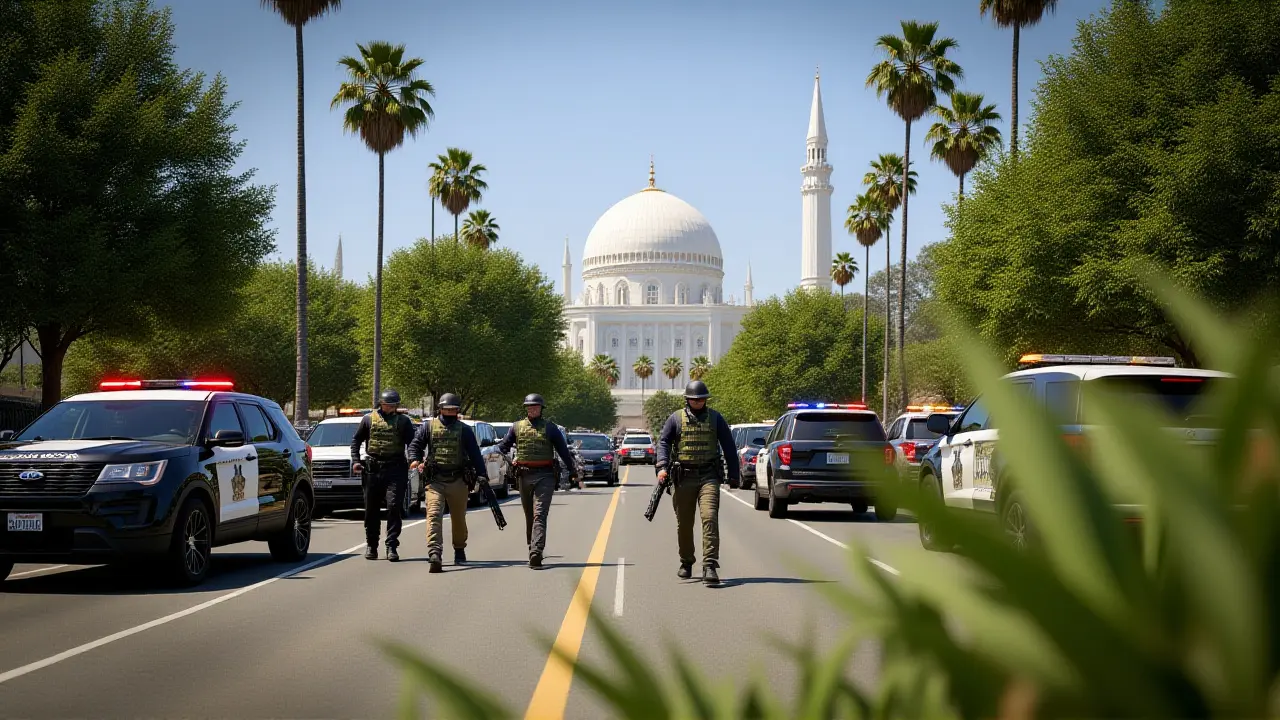
It’s the kind of nightmare no parent wants to imagine. Gunmen banging on doors. Screams echoing through hallways. But inside the Islamic Center of San Diego, chaos was met with calm courage. On a Monday that will haunt this community for years, security guard Amin Abdullah didn’t just do his job—he became a shield for more than a dozen children and staff members.
The attack, which left three people dead including Abdullah, has been officially classified as a hate crime by Scott Wahl, Police Chief of the San Diego Police Department. Two teenage suspects, aged 17 and 18, were found dead in a nearby car from apparent self-inflicted gunshot wounds. But while the headlines focus on the tragedy, survivors are speaking out about the bravery displayed by students and staff alike.
A Moment of Terror at the Islamic Center
The scene inside the mosque’s school was pure panic. According to accounts from those present, the gunmen pounded on doors, trying to force their way into classrooms where children were learning. It wasn’t long before the situation escalated into gunfire.
Here’s the thing that makes this story so chilling—and so inspiring—the attackers didn’t get far. Amin Abdullah, who had been working as a security guard at the center, reacted instantly. He moved to block access to the classrooms, effectively trapping the shooters outside the most vulnerable areas. His actions gave teachers and students crucial seconds to hide and call for help.
“He acted quickly,” said one witness, describing how Abdullah positioned himself between the threat and the children. “Without him, we don’t know how many more would have been hurt.”
Community Gathers Around a Beloved Hero
Abdullah isn’t just remembered as a hero; he’s mourned as a friend, a neighbor, and a pillar of the local Muslim community. The Council on American-Islamic Relations (CAIR), specifically its San Diego chapter, released a statement praising his sacrifice. They noted that his quick thinking saved over a dozen lives—children and educators who might otherwise have been caught in the crossfire.
The Associated Press reported that the community is grieving deeply, calling Abdullah “beloved” for his dedication to protecting others. Many described him not only as a guard but as someone who knew every child by name, checking in on them regularly and ensuring they felt safe within the mosque walls.
This sense of loss extends beyond the immediate circle of family and friends. Across social media and local news outlets, tributes poured in from strangers who had never met Abdullah but admired his reputation for kindness and vigilance.
Investigation Points to Hate Crime Motive
While details remain sparse, law enforcement officials have made it clear: this wasn’t a random act of violence. Scott Wahl stated unequivocally that the shooting fits the profile of a hate crime—a targeted attack motivated by bias against Islam. This designation carries significant weight, both legally and symbolically, signaling that the perpetrators sought to harm an entire community rather than individuals.
The two suspects, whose identities haven’t been fully disclosed yet, appeared to plan their assault carefully. Their decision to target a place of worship during school hours suggests premeditation aimed at maximizing fear and disruption. Unfortunately, such attacks aren’t new in recent years, though each one leaves fresh wounds on already traumatized communities.
What sets this incident apart is the outcome. Thanks largely to Abdullah’s intervention, the death toll remained limited to three victims—including himself—and no additional injuries were reported among the hidden students and staff.
Lessons Learned and Next Steps
In the aftermath of any mass casualty event, questions arise about preparedness and prevention. For now, investigators are focusing on understanding the motives behind the attack and identifying whether there were warning signs missed along the way. Meanwhile, community leaders are emphasizing resilience and unity.
CAIR San Diego has stepped up efforts to support affected families, offering counseling services and organizing memorial events. Local mosques have also increased security measures, installing additional cameras and hiring extra guards to ensure similar tragedies don’t happen again.
But perhaps the most important lesson comes from the students themselves. Despite the terror they faced, many demonstrated remarkable composure under pressure. Teachers recounted stories of kids quietly comforting each other, following instructions without hesitation, and even helping younger peers stay calm until police arrived.
Looking Ahead
As the investigation continues, attention turns toward healing. Funerals are being planned for all three victims, with ceremonies expected to draw large crowds eager to pay respects. In the meantime, conversations around safety in religious institutions continue nationwide, prompting calls for stronger protections and greater awareness of potential threats.
Frequently Asked Questions
Who was Amin Abdullah?
Amin Abdullah was a security guard at the Islamic Center of San Diego who died heroically while protecting children and staff during a shooting. He is widely praised for his quick actions, which saved numerous lives.
Why was the shooting called a hate crime?
San Diego Police Chief Scott Wahl determined the attack was motivated by bias against Muslims, classifying it as a hate crime based on evidence suggesting intentional targeting of the mosque.
How many people were killed in the shooting?
Three people died in total: security guard Amin Abdullah and two other victims whose names have not yet been publicly released. No other casualties were reported.
What happened to the shooters?
Two teenage males, aged 17 and 18, were identified as the shooters. Both were found dead in a car near the scene from what authorities believe were self-inflicted gunshot wounds.
How did the community respond after the attack?
The community rallied together, mourning Amin Abdullah and supporting affected families. Organizations like CAIR provided resources, while locals organized memorials and heightened security precautions.
Popular Posts